
12-hour launch offer — save up to 45% on selected plans.See plans

Primary keyword: Qwen Image 3.0 prompts

Qwen Image 3.0 Prompts: A Beginner-Friendly Guide

Use a repeatable prompt structure for portraits, products, posters, illustrations, and architecture without learning technical jargon first.

Current status

Qwen Image 3.0 was officially released on July 21, 2026. The launch confirms prompts up to 4.5K tokens, complex layouts, small text and native rendering in 12 languages. The patterns below combine those confirmed capabilities with production-safe prompt practices; critical text and facts still require human review.

Ready-to-use visual inspiration

Qwen Image 3 prompt library

Explore 56 visual storytelling prompts across subject, composition, camera, light and atmosphere. Copy a starting point, then adapt motion or sound cues into a single Qwen Image 3 frame.

56 prompts
Nature

Jellyfish in the abyss

Create with this prompt

A luminous jellyfish drifts through a black underwater canyon while smaller jellyfish rise in the distance. The camera glides slowly upward beside its translucent bell; fine particles roll through shafts of blue light, tentacles pulse naturally, and deep ocean ambience remains soft and spacious.

Cinematic

Red silk over the salt flat

Create with this prompt

Long red silk ribbons ripple above an endless white salt flat beneath moving storm clouds. Track laterally along the fabric as wind sends waves through each layer, long shadows slide over cracked ground, and the restrained soundscape carries only fabric, wind, and distant thunder.

Fantasy & animation

Storm inside a bottle

Create with this prompt

Macro cinematic view of a tiny wooden sailboat trapped inside a rain-covered glass bottle. The miniature sea rocks the hull as lightning briefly illuminates the sails; orbit gently around the wet glass with shallow depth of field, crisp droplets, muffled thunder, and creaking timber.

Cinematic

Color blooming in water

Create with this prompt

Orange, magenta, violet, and cyan ink bloom through crystal-clear water in extreme slow motion. Hold a clean macro frame as curling clouds collide, fold, and dissolve into delicate filaments; use bright backlight, microscopic detail, subtle liquid movement, and no visible container.

Product

Levitating ceramic speaker

Create with this prompt

A sculptural ceramic speaker floats a few centimeters above warm peach sand at sunrise. Make a precise half-orbit while the speaker rotates slowly, fine grains lift into the air, and a soft bass pulse creates concentric ripples below; premium product lighting, clean surfaces, no branding.

Fantasy & animation

Waterfall flowing into the moon

Create with this prompt

A moonlit waterfall reverses direction and streams upward from a dark forest into luminous clouds. Begin at the foaming rocks, then crane toward the full moon as water beads become silver stars; drifting mist, moving treetops, immense scale, and an ethereal rushing-water soundscape.

Travel

Flight above geometric flower fields

Create with this prompt

Aerial flight over geometric flower fields arranged in violet, gold, red, and green blocks. The camera advances smoothly at low altitude while cloud shadows travel across the landscape, rows of flowers bend in waves, and morning haze reveals layered farmland on the horizon.

Sci-fi

Mechanical hummingbird

Create with this prompt

A tiny brass mechanical hummingbird hovers beside lavender at golden hour. Follow its rapid articulated wings in a slow macro arc as miniature gears turn, pollen floats through warm light, and the bird darts once between blossoms; precise metal reflections and delicate wing hum.

Cinematic

Astronaut at the silver lake

Create with this prompt

Wide cinematic shot of a lone astronaut beside a silver lake at sunrise. The camera makes a slow dolly push toward the visor as mist drifts over the water and warm light catches the suit. Gentle wind, distant birds, realistic reflections, restrained film grain, natural stereo ambience.

Cinematic

Midnight neon alley

Create with this prompt

A rain-soaked neon alley after midnight, viewed from eye level. The camera glides slowly forward beneath awnings while puddles ripple, steam escapes from vents, and signs reflect across wet pavement. Moody blue and magenta color grade, soft traffic hum, rainfall and distant footsteps.

Cinematic

Last train across the desert

Create with this prompt

A vintage steam train crosses a high wooden bridge through an open desert at golden hour. Smooth lateral tracking keeps pace with the locomotive as smoke trails in the wind and sunlit dust rolls below. Epic wide composition, warm film color, rhythmic rail clatter and a distant whistle.

Cinematic

Dance inside the spotlight

Create with this prompt

Full-body view of a contemporary dancer moving alone beneath one theater spotlight. The camera performs a slow semicircular arc while fabric turns through the light and fine dust floats in the air. Deep black stage, graceful controlled motion, soft footfalls and spacious hall reverb.

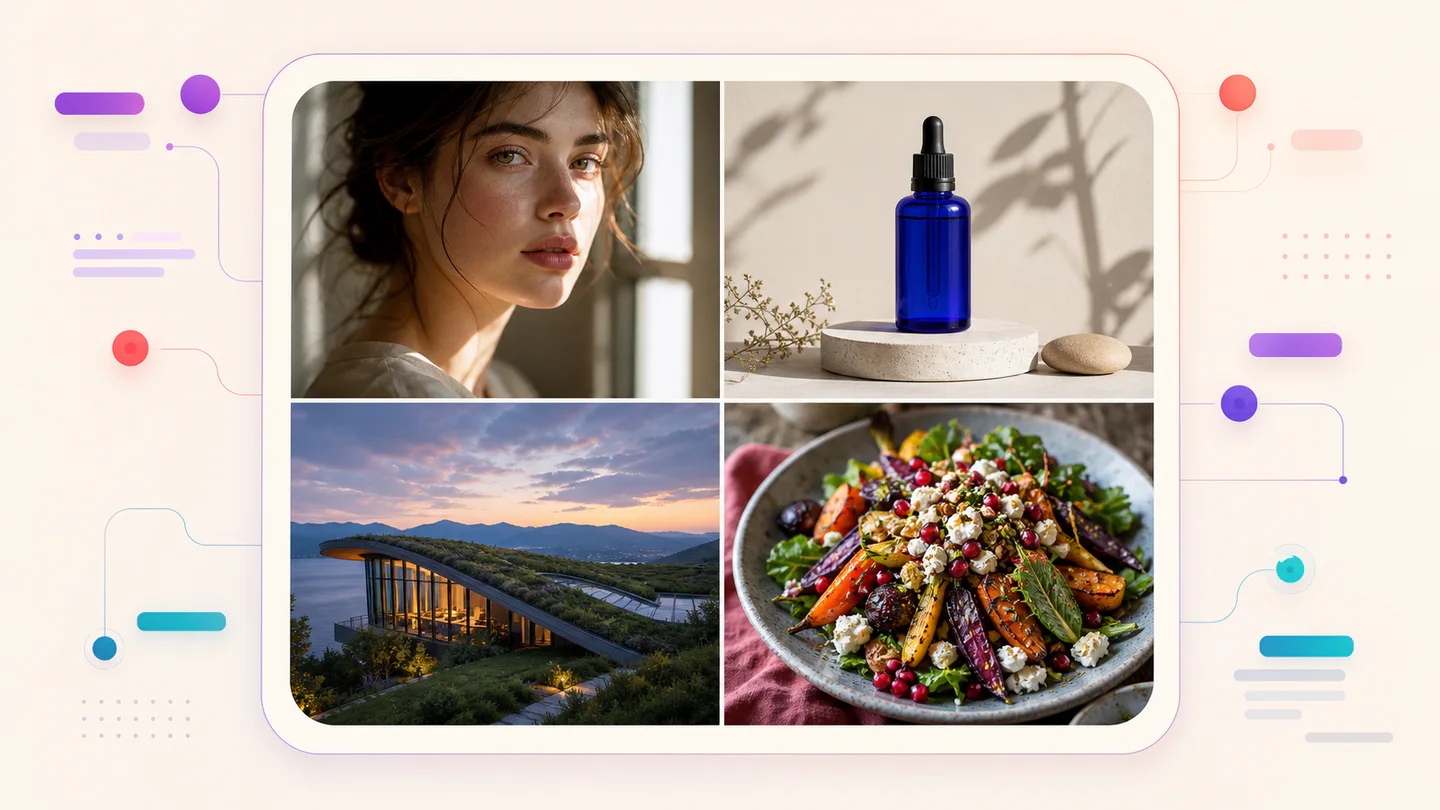
Illustrated Qwen Image 3.0 prompt case board with portrait, product, architecture and food scenarios

Illustrated case

One prompt structure, four creative directions

Read the board as four controlled starting points. Keep subject, setting, style, composition, lighting and constraints in the same order; change one block at a time so you can tell which instruction improved the result.

Illustrative workflow image—not an unedited Qwen output or a benchmark result. Use it to understand the method, then validate your own prompts and check the linked official sources.

01

Use the four-part prompt formula

Write one clear line containing the subject, setting, visual style, and lighting. Add camera or material details only when the first result needs more control.

  • Subject: what should be most important?
  • Setting: where is the subject?
  • Style: photo, illustration, 3D, poster or other medium
  • Lighting: soft daylight, studio light, sunset or dramatic contrast
02

Start from a useful example

Copy the closest example and change one variable at a time. Keeping the rest stable makes it easier to learn what each phrase changes.

  • Portrait: natural skin, eye-level framing, soft window light
  • Product: clean silhouette, exact material, controlled studio shadow
  • Poster: clear hierarchy, quoted text, restrained color palette
  • Architecture: viewpoint, scale cue, material and time of day
03

Refine one thing at a time

If the composition is right but the mood is wrong, change only the lighting or palette. If text matters, quote the exact copy and ask for no extra text. Save successful prompts in your studio.

04

Control layouts and exact text deliberately

For a poster or interface, describe the reading order, major regions, alignment and quoted copy. Qwen reports stronger complex-layout and small-text capability, but every important word should still be checked in the final image.

  • Write exact copy inside quotation marks
  • State the number and position of content blocks
  • Name the language and forbid extra text
  • Proofread names, prices and legal text manually
05

Diagnose a weak result before adding more words

First decide whether the failure is subject accuracy, composition, text, style or lighting. Rewrite only that part, keep the seed and other settings stable when possible, and stop adding adjectives that compete with one another.

06

Build prompts for infographics, posters and product ads

For a dense visual, define the canvas, information hierarchy and exact copy before describing decoration. A useful pattern is: purpose, audience, layout regions, quoted text, visual system and exclusions. Ask for one clear reading path and reserve empty space around important copy.

  • Infographic: title, three numbered facts, one chart and a source area
  • Poster: one headline, one product, one benefit and one CTA
  • Product ad: accurate material, controlled shadow and brand-safe palette
  • Storyboard: fixed character, shot type, action and continuity note
07

Turn successful prompts into a reusable system

Save the final prompt together with model, aspect ratio, seed, date and output. Replace business-specific values with named slots such as product, audience, headline and palette. A tested prompt template reduces paid retries and makes quality easier to reproduce across a team.

  • Keep a baseline output beside every approved template
  • Version templates when the model or provider changes
  • Separate exact copy from descriptive visual language
  • Retire templates that repeatedly need manual repair

Frequently asked questions

What is a good Qwen Image 3.0 prompt structure?

Start with subject, setting, visual style and lighting. Add composition, camera, material or exact text only when those details affect the result.

Can I write prompts in Chinese?

Yes. The official release highlights multilingual understanding and rendering. Keep critical text quoted and inspect every character in the result.

How long should a prompt be?

Use the shortest prompt that removes ambiguity. Qwen Image 3.0 supports much longer input, but length alone does not improve an image.

Does this site's generator already use Qwen Image 3.0?

Yes. Qwen Image 3 is the default, and users may also select Qwen Image 2 Standard or Pro. Every task retains the model that actually created it.

How should I prompt exact text in Qwen Image 3?

Put the required copy in quotation marks, name its language, location and hierarchy, and explicitly forbid extra words. Keep critical prices, dates and legal copy short, then proofread every character before publishing.

Which Qwen Image 3 prompts are best for commercial work?

Prompts tied to a deliverable perform best: a marketplace hero image, product benefit poster, localized social ad, menu or infographic. Include dimensions, brand constraints, required copy and a review checklist.

Continue reading

Browse all Qwen Image 3.0 guides

Try the guided image workspace

Start with a plain-language prompt, choose a format, and refine the result from your private studio.